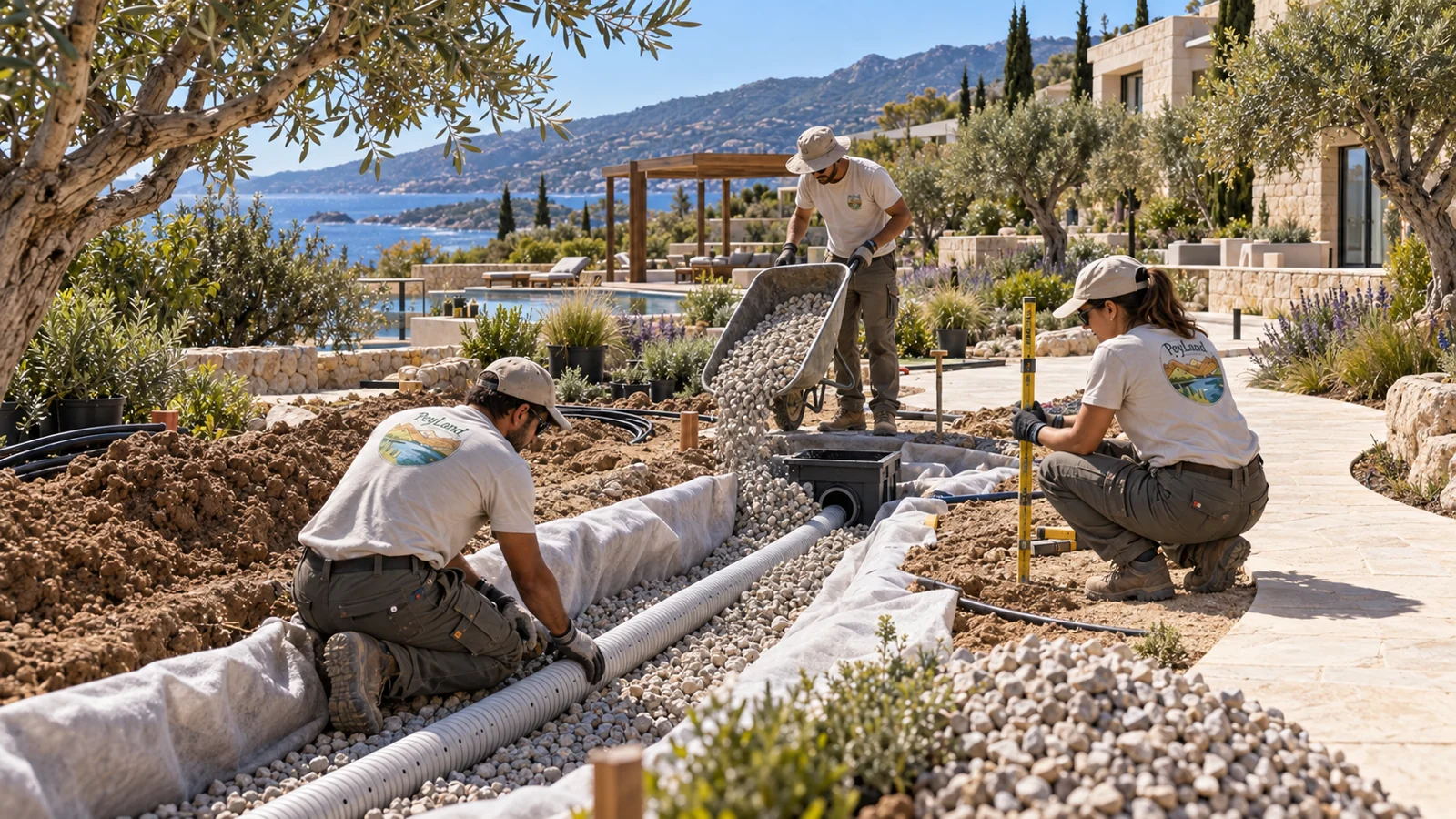
01 / SUBSURFACE
Subsurface drainage
Controlled collection of excess soil water through suitable drainage aggregates and perforated pipework.
System detailPEYLAND PLANT & ARCHITECTURE
LANDSCAPE INFRASTRUCTURE · WATER MANAGEMENT
Project-specific drainage solutions for controlled removal of surface water and groundwater around gardens, paved areas and buildings.
REQUEST A QUOTE FOR YOUR PROJECTOUR FIELDS OF APPLICATION
Soil characteristics, water volumes, gradients and discharge options differ from site to site. Solutions are defined through site assessment and detailed design.
Controlled collection of excess soil water through suitable drainage aggregates and perforated pipework.
System detail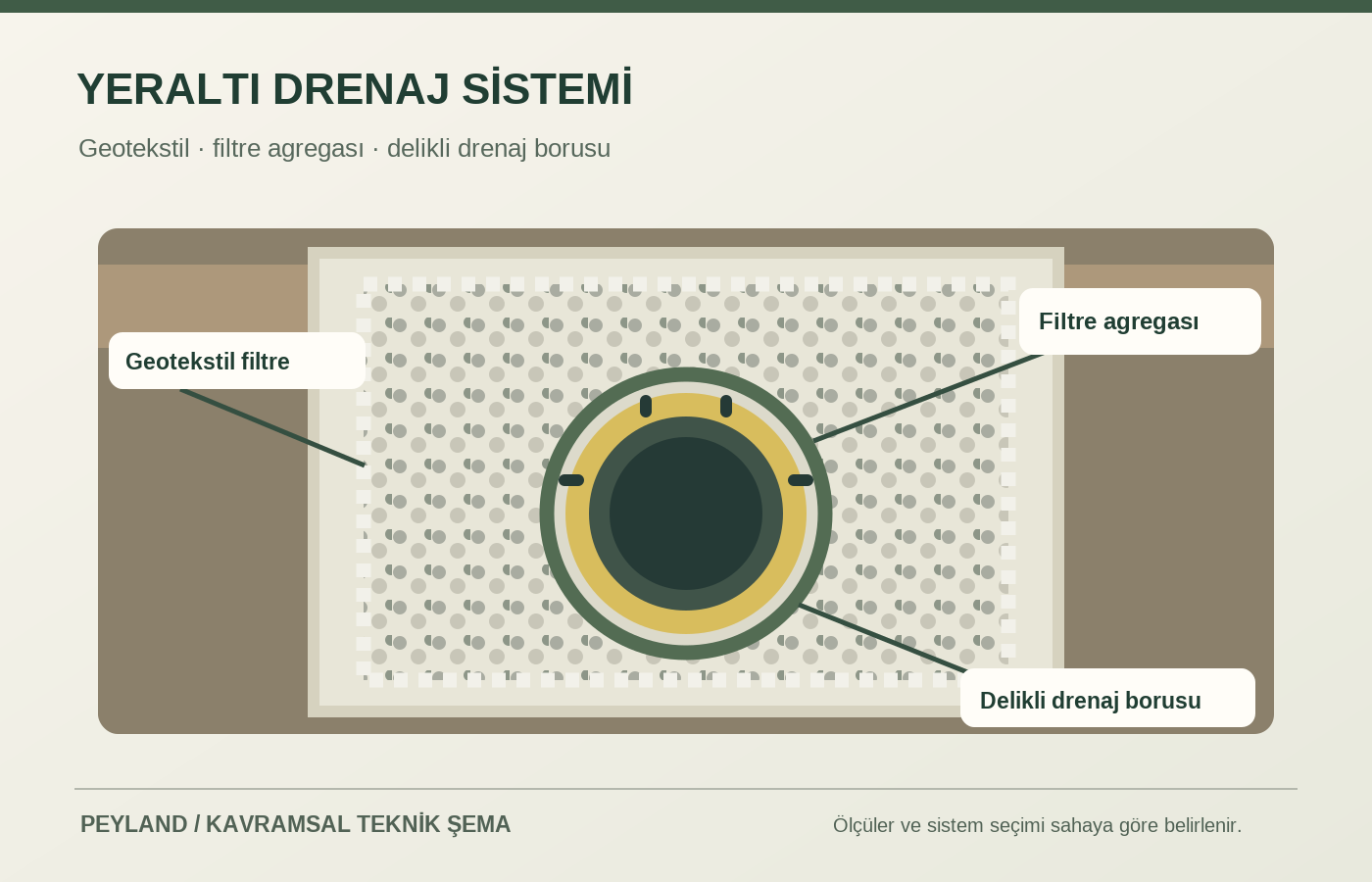
Geotextile-wrapped corrugated drainage pipes with a filter solution suited to site and construction requirements.
System detail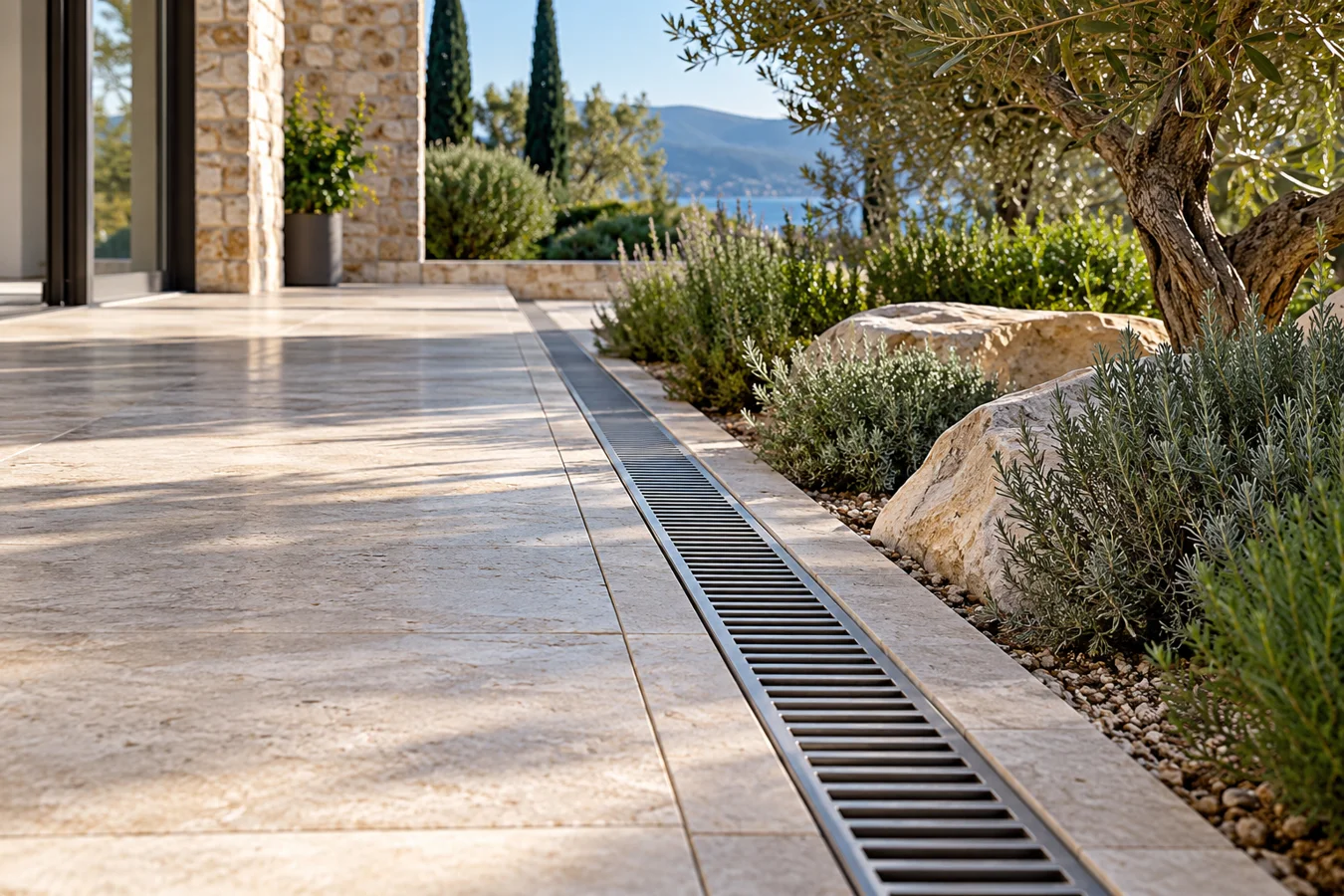
Channels and grates that collect surface water on terraces, courtyards and walkways in a controlled manner.
Construction approach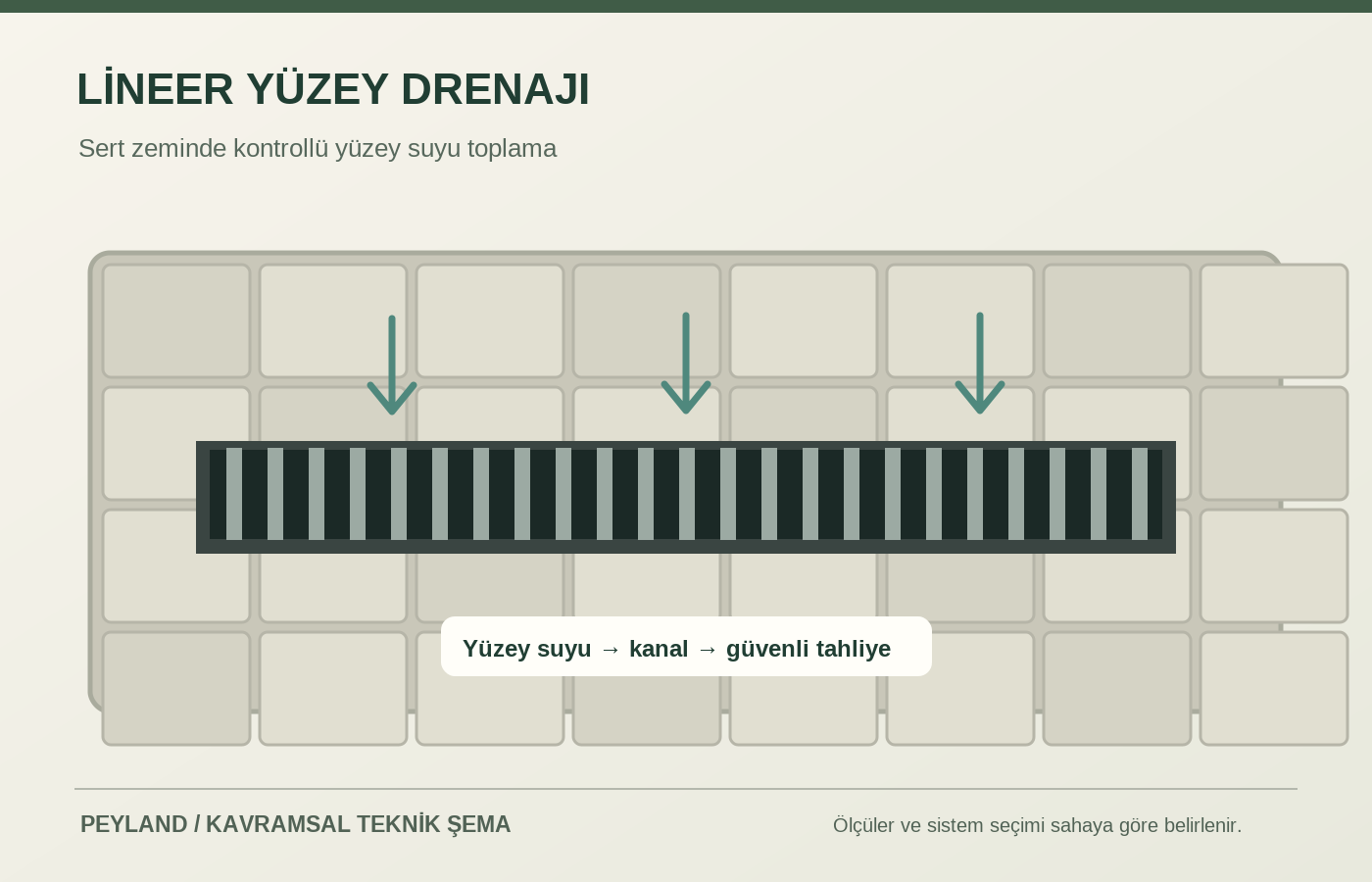
Drainage of surface water from gardens, roads and building surrounds using appropriate levels and gradients.
Construction approach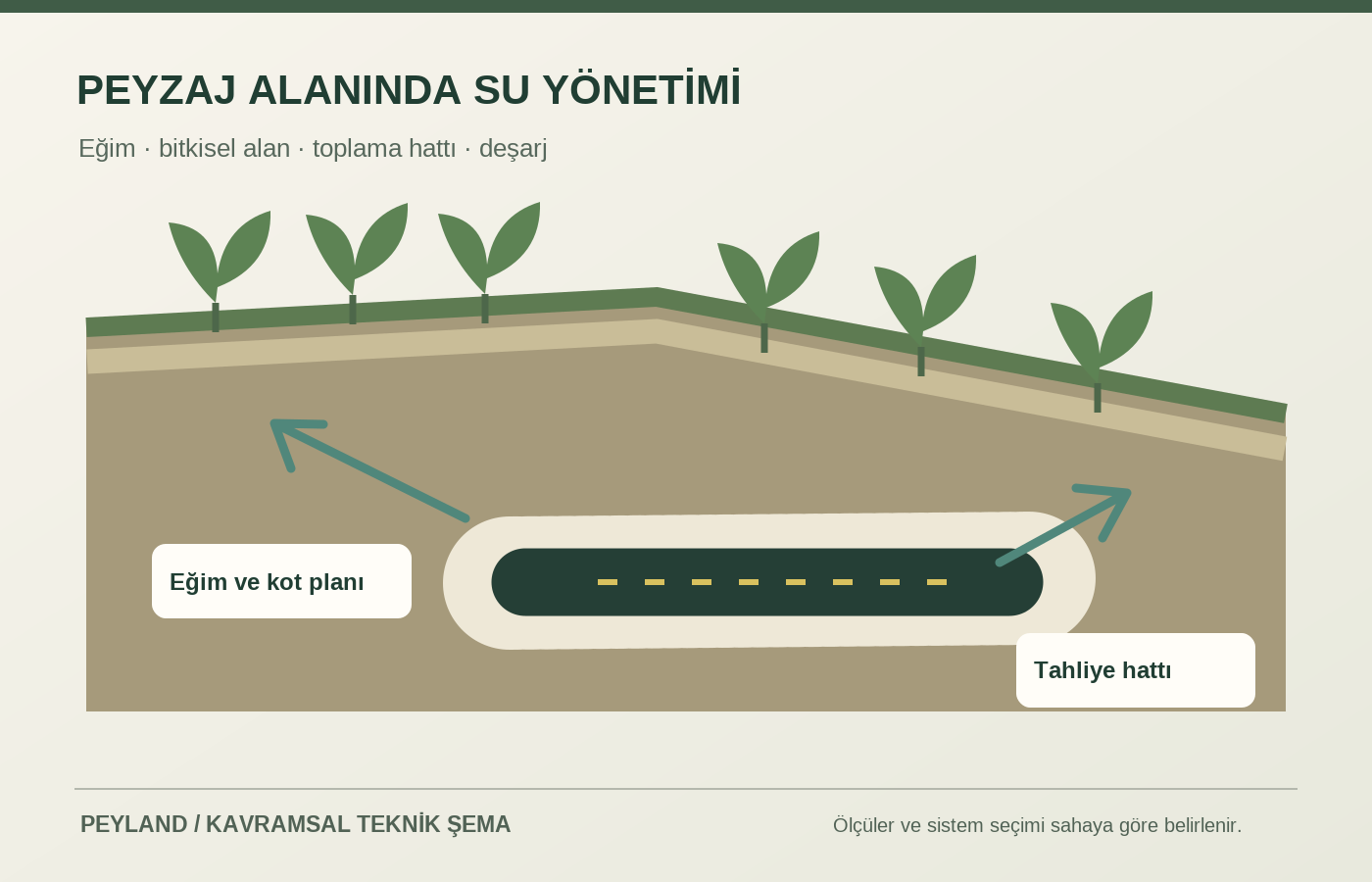
Drainage installations in residential estates, apartment developments and commercial grounds coordinated with infrastructure disciplines.
Application areasImages are representative landscape-construction visuals from the Peyland website and conceptual technical diagrams prepared for this page. They do not document drainage projects completed by Peyland.
Illustrative technical explanation. Pipe, aggregate and trench dimensions are project-specific.
WHERE IS DRAINAGE USED?
THE PEYLAND APPROACH
Surface levels, soil permeability, rainfall loads and existing infrastructure are assessed together. Applicable engineering and permitting requirements are taken into account.
FREQUENTLY ASKED QUESTIONS
Drainage needs must be evaluated against site conditions and existing infrastructure.
The cause of water ponding is investigated. Regrading or soil improvement may suffice in some areas, whereas others require surface or subsurface drainage.
No. Pipe diameter, filtration, aggregate grading and installation depth depend on calculations and ground conditions.
An appropriate discharge point is selected with due regard to existing infrastructure and permits. Water is not directed uncontrollably towards adjoining plots or building foundations.
LET'S DISCUSS YOUR PROJECT
Share your location, approximate area and photos of the issue so that we can assess a suitable construction scope together.
Technical notes are for general information. The final drainage solution depends on site data, engineering calculations where required, applicable regulations and discharge conditions.